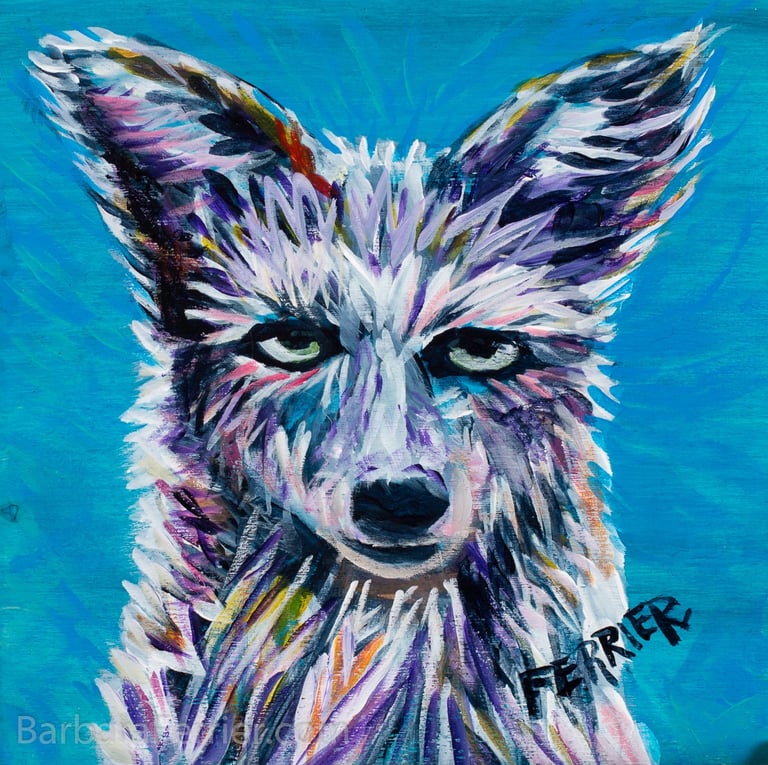


After studying acting and stage direction (including an intensive program in London), Barbara paralyzed her left hand in a work related injury. Immediately Barbara realized she could translate her directing goals onto canvas. When she left the hospital, her first stop was to the local art supply store. She immediately began experimenting in order to learn to draw and paint.
Barbara studied painting and film making in college. She traveled to Kathmandu, Nepal and lived in a farming village where she painted her first solo exhibition and made a documentary film on the arts and crafts of Nepal. While she trekked through the Himalayan foothills with her painting and film making equipment, Barbara was able to paint and record the sheer beauty of Nepal and its people.
Shortly after her return from Nepal, Barbara attended a small art school in California with the hopes of refining her drawing skills. At that time the school emphasized traditions such as minimalism and she was unable to achieve her goals there. She did, however, meet visiting artists and learn about their profession.
Barbara chose to study the arts of non-western cultures. While teachers from the art school disapproved of her decision, her anthropology professors welcomed the opportunity to help her learn as much as she could from a variety of traditions.
Barbara continued to travel, paint and film her experiences. She lived on an Indian reservation in Washington State where she painted landscapes from a native village, which was buried by a mud slide 500 years earlier. While working at the archaeological site as a tour guide, she also made a film about the site by talking to current day Indian descendents about their beliefs and studying historical literature. She also filmed a rural, amateur rodeo in Galisteo, New Mexico and painted.
Barbara is proud of the wide variety of artistic traditions that have influenced her paintings. Her use of color is easily traced back to the traditional painting in the shrines of Katmandu and other regions of Nepal. Historically these paintings used color as a way to communicate their message to the diverse peoples of that region. In this country the size of Tennessee, there were 500 distinct languages. Travels to Greece to visit the archaeological sites, Mexico to study photography and observe Mexican traditions, and years of hiking in New Mexico contributed to her learning from Anasazi, native and western art traditions.
While landscape painting has always been important to Barbara’s work, she enjoys the opportunity to broaden her horizons with focused projects. As her daughters embraced sports, Barbara created a series of ‘women in sports,’ and when her husband brought home a dog he found starving in the desert, Barbara created a series profiling rescued dogs and wrote their life stories.
Barbara has exhibited her paintings since 1980 when she first returned from Nepal. She has participated in group shows in New Mexico and Washington State. Barbara has had several solo exhibitions and has worked with galleries in Seattle and Kirkland, Washington.